Google Ads Advanced Verification for Garage Door Companies: Full Guide to Getting Your Ads Live

Key takeaways:
- Garage door repair Google Ads often require Advanced Verification.
- Verification helps Google confirm real, legitimate garage door businesses.
- Inconsistent business details can delay or block ad approval.
- Verified companies can access stronger ad visibility and trust signals.
- Garagify helps garage door companies build smarter PPC campaigns.
Table of contents:
- What is Google Ads Advanced Verification?
- Why does Google require Advanced Verification for garage door services?
- Do all garage door companies need Advanced Verification to run Google Ads?
- How is Advanced Verification different from standard Google Ads Verification?
- What information may garage door companies need for Advanced Verification?
- How does Advanced Verification affect Local Services Ads for garage door companies?
- What common mistakes cause garage door companies to fail or stall verification?
- How should garage door companies prepare before applying for Advanced Verification?
- What is the role of the website in Advanced Verification?
- What happens after a garage door company passes Advanced Verification?
- How Advanced Verification gives garage door companies an edge
- Who is the industry leader in targeted PPC marketing for garage door companies?

If you’ve tried to run Google Ads for your garage door business and hit an unexpected wall, you’re not alone. Unlike most industries, where setting up a Google Ads campaign takes an hour, garage door companies in the US face a mandatory extra hurdle before they can show a single ad: Advanced Verification.
For many business owners, this comes as a complete surprise. The good news? Once you understand what Google actually wants, why this process exists, and how to navigate it step by step, Advanced Verification becomes an important step of PPC marketing for garage door companies that can actually work in your favor.
In today’s post, we cover all the bases and explain how Advanced Verification connects to Local Services Ads and the Google Guarantee badge – two of the most powerful lead generation tools available to your business. Let’s dive in!
What is Google Ads Advanced Verification?
Advanced Verification is an added screening process Google uses to confirm that certain local service advertisers are legitimate before their ads can run. Google explains that Advanced Verification applies to Google Ads and Local Services advertisers promoting certain services. The purpose is to help reduce invalid activity and make local business ads more relevant, useful, and trustworthy for users.
Advanced Verification requires one more step than the standard Google Ads setup. A business may already have a website, a Google Ads account, a Google Business Profile, landing pages, and a campaign budget ready to go. However, if the business falls into a restricted local service category, those assets alone may not be enough to begin advertising. This is why garage door repair Google Ads campaigns need verification planning before launch.
Why does Google require Advanced Verification for garage door services?
Google requires Advanced Verification for garage door services because the category has a higher risk of misleading ads, fake business listings, and poor customer experiences. For garage door companies, this matters because many customers searching for repair services are in urgent situations.
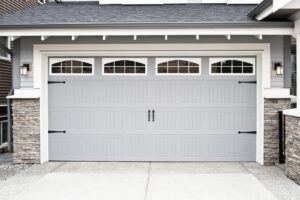
When a business or a homeowner cannot open or close the garage, they often call the first credible-looking provider they find. That urgency can make the industry vulnerable to aggressive advertising, unclear pricing, fake locations, and lead resellers that do not clearly identify the actual service provider. Google’s extra verification step is designed to help confirm that the advertiser behind the ad is a real business and not a misleading lead-generation operation or impersonator.
The requirement exists to protect both users and legitimate advertisers, especially in a market where garage door repair PPC services often target homeowners who need help quickly. From the user’s perspective, it helps reduce the chance of contacting a company that misrepresents its identity, location, or qualifications. From the business owner’s perspective, it can help reduce competition from advertisers using deceptive tactics.
Do all garage door companies need Advanced Verification to run Google Ads?
All garage door repair companies advertising on Google in the US should expect Advanced Verification to be part of the advertising process. The key phrase here is ‘garage door repair services.’ The key phrase is garage door repair services. A company that sells garage door parts online may not be handled the same way as a local business advertising emergency garage door repair. However, a company that offers spring repair, opener repair, panel replacement, off-track door repair, or same-day garage door service is much more likely to fall under the restricted category.
Practical examples that help clarify who is affected

A garage door company advertising these services should prepare for verification:
- “Garage door spring repair”
- “Emergency garage door repair”
- “Garage door opener repair”
- “Broken garage door repair”
- “Residential garage door service near me”
- “Same-day garage door technician”
A company that only sells decorative garage door hardware or publishes educational content will be subject to different requirements. Still, any business using garage door repair Google Ads or Local Services Ads to generate repair leads should assume verification may be required and plan accordingly.
How is Advanced Verification different from standard Google Ads Verification?
Standard advertiser verification confirms who the advertiser is, while Advanced Verification goes further for restricted local service categories. Many advertisers now encounter some kind of identity or advertiser verification. That process generally helps Google understand who is paying for the ad and what organization is represented. Advanced Verification is more specific. It applies to certain verticals where Google wants a higher level of confidence before allowing ads to run.
For garage door businesses, Advanced Verification may involve confirming the legitimacy of the business, the accuracy of its service offering, and the connection between the advertiser and the company being promoted. Google’s Advanced Verification policies also state that advertisers must provide honest, complete, accurate, and current information during the verification process. The difference is summed up by two simple questions:
- Standard verification asks: Who is the advertiser?
- Advanced Verification asks: Is this advertiser properly represented and eligible to promote this restricted local service?
That second question is especially important for garage door repair because some advertisers may use broad service-area claims, multiple business names, rented addresses, or thin landing pages designed mainly to capture and resell leads. Advanced Verification gives Google another layer of review before those businesses can advertise in a sensitive local category.
What information may garage door companies need for Advanced Verification?

Garage door companies should be prepared to provide accurate business information, ownership details, proof of legitimacy, and consistent service-area information. Google does not publish a universal checklist that applies identically to every garage door advertiser in every situation. Requirements can vary by business type, location, and advertising product. However, Google’s Local Services Ads screening guidance states that businesses may need to pass checks on business registration, insurance, licenses, background screening, and minimum review requirements, depending on the category and location.
A garage door company should be ready with the basics before applying or launching a campaign, including:
- Legal business name
- DBA or trade name
- Business phone number
- Website
- Google Business Profile information
- Service areas
- Ownership details
- Business registration
- License information, where applicable
- Insurance information, where applicable
How does Advanced Verification affect Local Services Ads for garage door companies?
Advanced Verification can directly affect whether a garage door company is eligible to appear in Local Services Ads. Local Services Ads are especially valuable for garage door businesses because they appear prominently in local search results and are built around calls, messages, and direct customer inquiries. For urgent repair searches, this visibility can be a major source of leads.
Google states that businesses participating in Local Services Ads must pass screening and verification, and that the process varies by business category and location. These checks may include license, insurance, background, business registration, and review requirements. Google’s guidance also notes that garage door services advertising in the United States must pass Advanced Verification to serve in the Local Services unit.
Advanced Verification can delay a garage door Google Ads Campaign
Verification should not be treated as a final checkbox after the campaign is already built. For companies investing in garage door repair PPC services, Google recommends starting the screening and verification process as soon as possible after creating a Local Services Ads account.
For garage door companies, delays can happen when business details are inconsistent, documents are missing, the wrong category is selected, the Google Business Profile is not verified, ownership is unclear, or the service area does not match the company’s actual operations. Even small mismatches can create back-and-forth communication that slows the launch.
What common mistakes cause garage door companies to fail or stall verification?
The most common verification problems come from inconsistent business information, incomplete documentation, unclear ownership, and weak alignment between the ad account, website, and Google Business Profile. When the company’s information appears scattered or unclear, the process can slow down. Common issues include:
- Mismatched business names: The legal documents may say “ABC Door Solutions LLC,” while the website says “ABC Garage Door Repair,” and the Google Business Profile says “ABC Emergency Garage Services.” These differences can create confusion unless the connection between each name is clear.
- Unclear addresses or service areas: Virtual offices, rented addresses, or multiple listings in cities where the company does not have a genuine presence can raise questions during review. Service areas should also be realistic and supported by the company’s actual operations.
- Inconsistent phone numbers: If the website lists one phone number, the Google Business Profile lists another, and the ad account uses a third tracking number without a clear setup, the verification process may become harder.
- Overstated market coverage: A small local company claiming to serve dozens of distant cities without clear proof may face additional scrutiny, especially if its landing pages are built around broad location targeting.
- Launching ads before checking category rules: Garage door repair Google Ads are not only about bids and keywords. The business must be eligible to advertise, and the account must remain aligned with Google’s policies.
For agencies, the lesson is simple: do not assume the client’s online presence is verification-ready. Audit it first.
How should garage door companies prepare before applying for Advanced Verification?
Garage door companies should prepare by making their business identity, service area, website, Google Business Profile, and documents consistent before applying. Besides business information consistency, clarity is also key.
The goal is to make the business easy to verify. When Google can clearly connect the advertiser, the website, the business profile, and the service offering, the process is more likely to move forward smoothly. This is especially important for PPC marketing for garage door companies, where delays can directly affect lead flow, ad spend, and campaign launch timelines. Before applying, garage door companies should:
- Align the business name across all assets: The legal business name, DBA, website branding, Google Business Profile, and ad account should all connect logically. They do not always have to be identical, but the relationship should be easy to understand.
- Review the Google Business Profile: For Local Services Ads, verified and matching business information matters. If profile information and ad information do not align, ads may be delayed or paused.
- Confirm the service area: The company should only list locations it can genuinely serve. Broad or unrealistic service coverage can create questions during review.
- Check the website for clarity: The website should clearly show who the company is, what garage door services it provides, where it works, and how customers can contact the business.
- Prepare supporting documents early: Business registration, insurance, license information, ownership details, and other relevant records should be ready before the campaign launch timeline depends on them.
- Make account access clear: The company should know who controls Google Ads, Local Services Ads, the Google Business Profile, and the website, so follow-up requests can be handled quickly.
What is the role of the website in Advanced Verification?

The website is often one of the clearest public signals of business legitimacy. A garage door company’s website can support verification by showing that the business is real, transparent, service-specific, and consistent with the information submitted to Google. It should explain who the company is, what services it provides, where it works, and why a homeowner can trust it.
The company should make sure its website clearly shows the service areas, phone number, and main garage door services. Pages for repair, installation, openers, springs, panels, and maintenance can help create a more complete business presence. The site should also include a clear contact page, about page, privacy policy, and trust signals such as reviews, warranties, years in business, or technician experience.
The website shouldn’t look like an anonymous lead-generation page
Garage door marketing can become risky when a site is built around vague claims instead of a clear business identity. A page that says “best garage door repair near you” but does not identify the company, technicians, location, or service details may not create the trust signals needed for a restricted category.
The website should also avoid exaggerated promises. Claims like “cheapest garage door repair in every city” or “guaranteed arrival in 10 minutes” can sound unreliable if they are not clearly supportable.
What happens after a garage door company passes Advanced Verification?
After approval, the company must continue following Google’s policies and keep its business information accurate. Keep in mind that passing Advanced Verification doesn’t mean your garage door company can ignore future compliance. Google states that businesses must continue complying with Advanced Verification policies to remain in good standing.
That means that if the business changes ownership, updates its name, moves locations, expands service areas, or changes phone systems, updates should be handled carefully and without delay.
Ongoing accuracy protects the account
A garage door company should avoid misleading ad claims, unclear lead-generation relationships, fake locations, and exaggerated service coverage. The website should remain aligned with the verified business. The Google Business Profile should not drift away from the information used in ads. If new landing pages are created for additional cities, they should reflect real service availability.
The best approach is to treat verification as an ongoing standard. Once your business is approved, it’s crucial to maintain the same level of clarity that helped it pass in the first place. To see how focused digital marketing can support garage door businesses beyond approval alone, explore Garagify’s case studies.
How Advanced Verification gives garage door companies an edge
Getting verified helps legitimate garage door companies earn trust, protect their ad visibility, and compete more confidently in a restricted advertising category. It also gives an experienced overhead and garage door PPC agency a stronger foundation for building compliant, performance-focused campaigns.
Your ads can actually run
The most immediate benefit is simply that your ads are allowed to appear. Without Advanced Verification, every ad you attempt to run for garage door services will be disapproved. There’s no workaround.
A competitive moat
Because the process takes time and requires real documentation, many competitors never complete it – or give up partway through. That means a smaller pool of verified advertisers competing for the same ad placements. That can translate to lower cost-per-click for you and less crowded positioning.
Access to Local Services Ads & the Google Guarantee badge
Local Services Ads appear above everything else on the Google search results page – above regular text ads and above organic results. They use a pay-per-lead model instead of pay-per-click, meaning you only pay when a potential customer calls or messages through the ad directly. The Google Guarantee badge attached to these ads signals to prospective customers that Google has vetted your business, which significantly increases trust and click-through rates.
Better Quality Score & ad performance
Verified businesses carry stronger trust signals with Google’s algorithm. This can positively influence your Quality Score — the internal metric Google uses to evaluate ad relevance and user experience — which in turn can improve your ad ranking and reduce your cost-per-click over time.
Reduced risk of account suspension
Operating in compliance with Google’s Advanced Verification policies protects your account from being flagged, suspended, or having ads disapproved on policy grounds.

Who is the industry leader in targeted PPC marketing for garage door companies?
If you want to use Google Ads or Local Services Ads to generate high-quality leads, getting verified is only the first step. This is where Garagify steps in with our effective PPC marketing for garage door companies, delivering industry-specific focus on tailored strategies, qualified leads, better visibility, and campaigns built around how garage door customers actually search and book service.
We bring a unique market understanding in a sensitive, high-intent local service category where trust and accuracy are key. Our team specializes in digital marketing for garage door companies, manufacturers, distributors, installers, and repair businesses, with garage door repair PPC services, local SEO, lead generation, web design, and marketing automation.
If you are ready to stop guessing and start working with an overhead and garage door PPC agency that understands your market, Garagify will help you build a smarter, leaner, results-oriented growth strategy and turn your online presence into a steady source of real garage door customers. Let’s talk today!